Bind variables can really boost the performance, security, and manageability of your SQL queries. With CloudSQL now supporting bind variables for all major data types, you can run your queries more efficiently within the platform.
What Are Bind Variables?
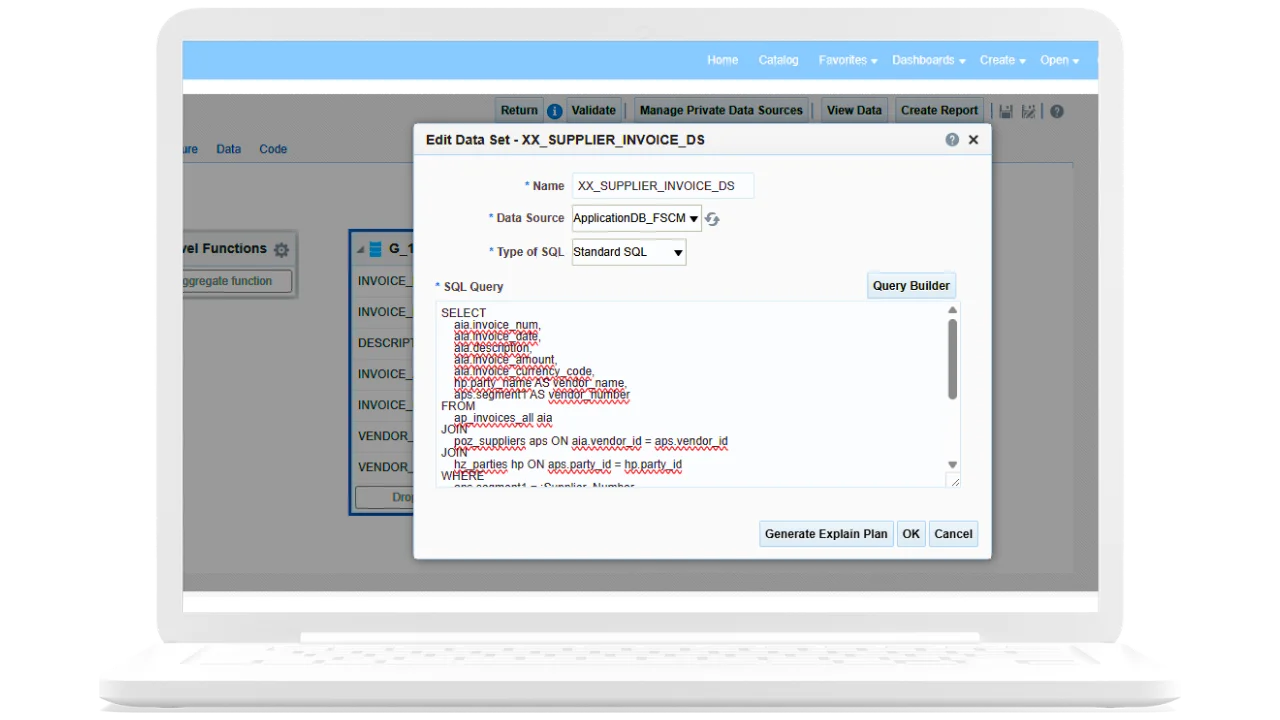
In Oracle Fusion, bind variables are placeholders you use inside your SQL or BI data model queries instead of hard coding the actual value. These variables start with a colon (:) followed by the variable name. When the report or query runs, Oracle Fusion automatically supplies the real value based on user input, parameters, or system context.
Example format: :id, :employee_number, :department_id
It helps you change only the value, not the full query. Cloud SQL also supports bind variables for all data types.
Advantages of Bind Variables
Using bind variables in CloudSQL can really enhance your queries by making them faster, safer, and much easier to handle. Instead of embedding values directly into your SQL, you pass them separately, which is a smart way to manage your data.
- CloudSQL prepares the query one time and reuses it with different values.
- It protects your data from SQL injection.
- Your SQL becomes easier to read and edit.
- You can run the same query many times with different values.
Also Read: Direct BI Server Integration: Modify Your BI Data Models Directly from CloudSQL
How CloudSQL Supports Bind Variables?
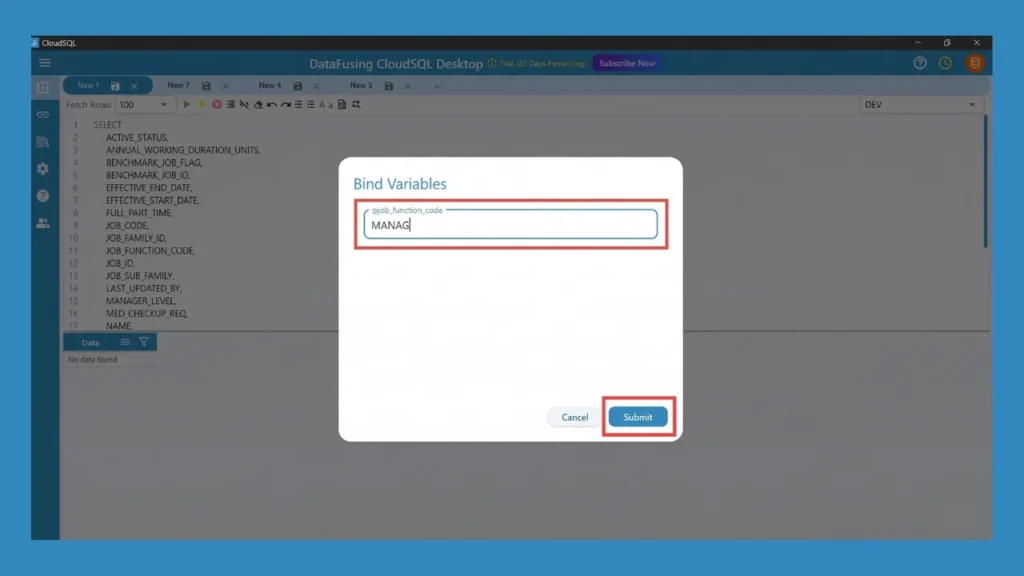
Step 1: Write your SQL query by inserting bind variables in the required places using the colon followed by the variable name (”: variable_name”) format.

Step 2: Click on the Execute button to run the query.

Step 3: Enter the specific value you want to use for retrieving the corresponding data and click Submit.

Step 4: View the result in the output grid.

By using bind variables effectively, you make your queries faster, safer, and easier to manage, ensuring a smoother and more efficient SQL experience.
At DataFusing, we are constantly improving CloudSQL for you by adding more and more features. Click here to start 30 Days Free Trial today.
You Can’t Ignore: Background SQL Execution: A Faster Way to Handle Heavy Queries in CloudSQL