“Without accurate reports, a business team is blind, deaf, and stranded in the middle of a freeway.”
ERP systems are only as valuable as the reports they produce; reports provide senior leadership with critical insight into company performance, regulatory compliance, and day-to-day operations. In many organizations using Oracle Fusion including OTBI, BI Publisher, and third-party tools like Power BI and Tableau,expectations for reporting are sky high, but so are the challenges.
Why does this matter? Inaccurate, delayed (real-time is usually essential for operations), or hard-to-use reports, lacking good visuals or drill-down can severely impact decision-making, compliance, and business efficiency. These are some of the most common Oracle Fusion reporting challenges faced by enterprises today.
Common Oracle Fusion Reporting Challenges
The following table highlights key Oracle Fusion reporting challenges along with their business impact.
| Challenge | What it is / Why it occurs | Impact on business users |
| Data Access Limitations | Many fields or entities are not exposed via subject areas, or OTBI lacks certain custom attributes. | Users miss crucial data; manual steps or external extracts needed. |
| Performance Bottlenecks | Slow queries, large dataset latency, poor filter/indexing, or inefficient joins | Slow reports risk timeouts, poor user satisfaction, heavy BI load. |
| Dependency on IT & Lack of Self-Service | Business users can’t easily build/modify reports; rely on technical teams. | Delays, backlogs, higher costs, reduced agility. |
| Complex Data Models / Layout Design Challenges | Large schema, weak cross-area joins, or bloated formatting slow report rendering. | Reports are hard to maintain, slow, and sometimes unreadable. |
| Data Extraction & Hybrid / Integration Issues | Pulling from multiple sources or external data complicates extracts | Higher complexity, risk of old data, manual reconciliation. |
| Scalability & Volume Issues | Large report exports, Excel row limits, growing data break reports | Incomplete/fragmented business insight, slow performance. |
| Security / Access Control Obstacles | Security roles or AORs block or limit report access | Frustration, failed reports, admin overload |
| Documentation & Governance Gaps | Missing docs for fields/models, unknown subject areas, or weak versioning. | Difficult/dangerous report maintenance, risk of errors |
Underlying Causes of These Challenges
Several underlying factors contribute to Oracle Fusion reporting challenges experienced by IT and business teams.
- Oracle Fusion’s schema is vast and highly normalized; often, even something “simple” like customer information requires querying dozens of tables or ADF view objects.
- As a cloud SaaS platform, custom indexing or physical database tweaks aren’t possible, limiting performance tuning. Challenges are especially noticeable during Oracle Fusion data migration, when large datasets are transferred across modules.
- Poor design: pulling wide tables (SELECT *) or skipping filters blows up report runtimes and loads.
- Report design and user concurrency must be balanced, running heavy jobs at peak times causes systemwide slowness.
- Monitoring/logging isn’t always enabled, so performance drops may go undetected.
Tips
- Always apply granular filters, especially on transaction dates, to avoid full table scans and large exports.
- Enable BI logs in early production for key reports, and use them to proactively monitor.
Must Read: Complete Guide to Oracle BI Publisher Performance Tuning for Fusion Applications
Best Practices & Performance Tuning Strategies
The following tips directly address Oracle Fusion reporting challenges with proven practices.
| Challenge Addressed | Best Practice / Tuning Tip |
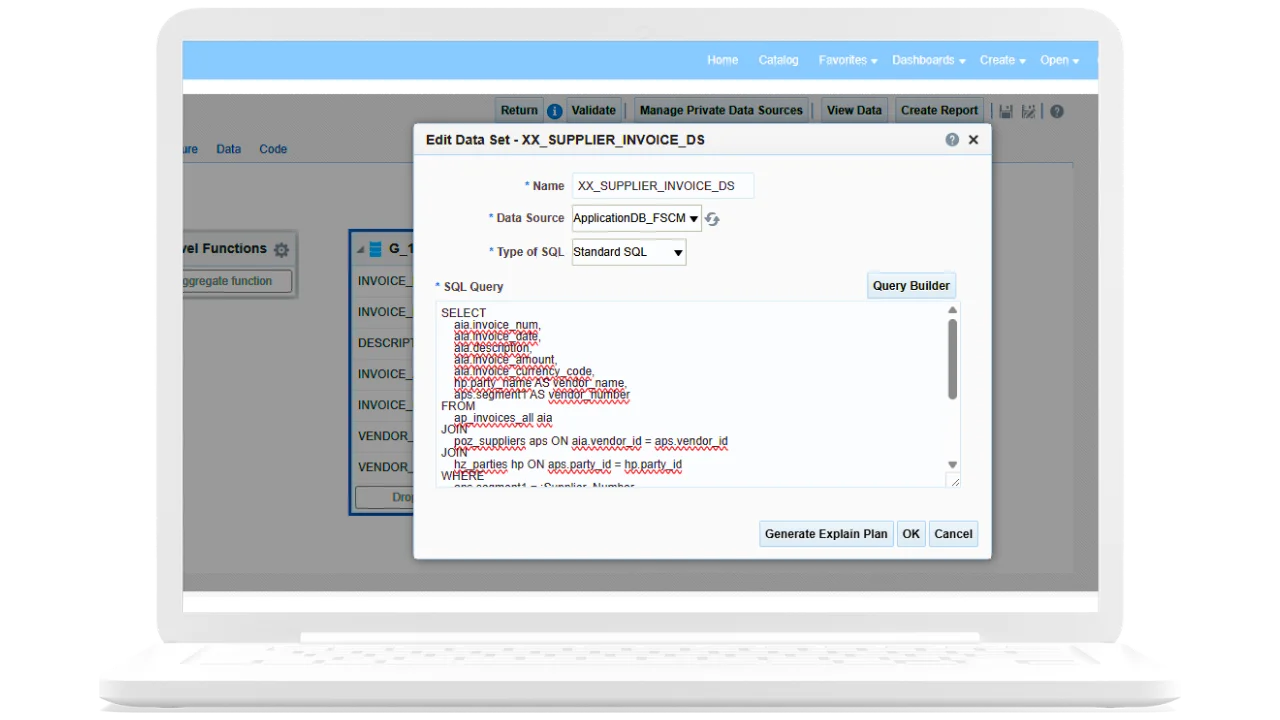
| Access & missing fields | Move from OTBI to BI and write custom SQLs to bring in the missing fields from Oracle Fusion database |
| Slow performance | Filter early; avoid SELECT *; optimize joins; use indexed columns; schedule heavy jobs off-peak. You should follow these for performance tuning. |
| IT dependency / Self-service | Self service reporting is limited, but there are workarounds. Train business teams in OTBI. Use BI publisher + bursting or BICC to take the data into an external data warehouse and let the users use third party tools like Tableau or Power BI to build report |
| Layout / formatting | Simplify report layouts; avoid nested tables; limit images; cache LOVs or static data. |
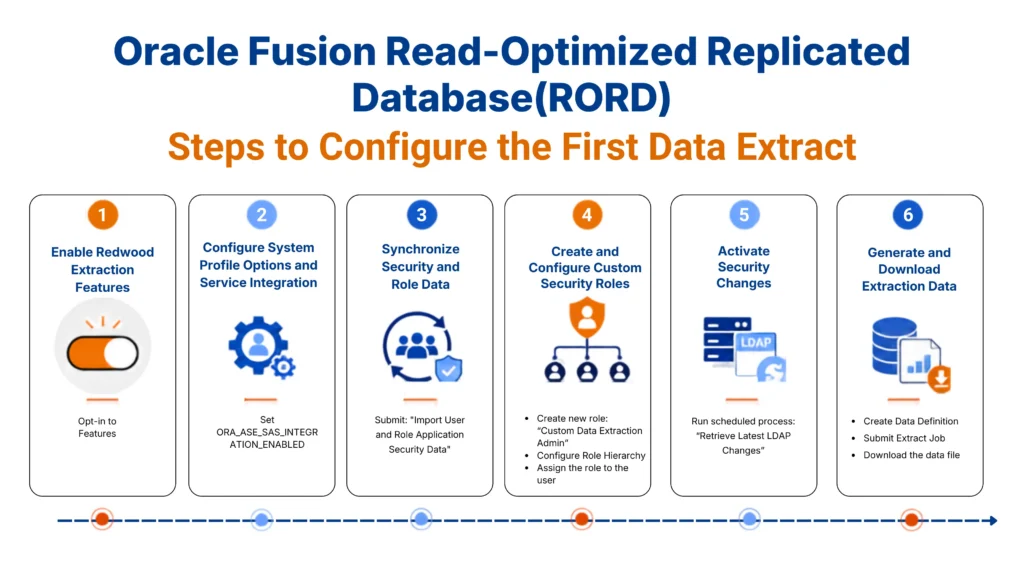
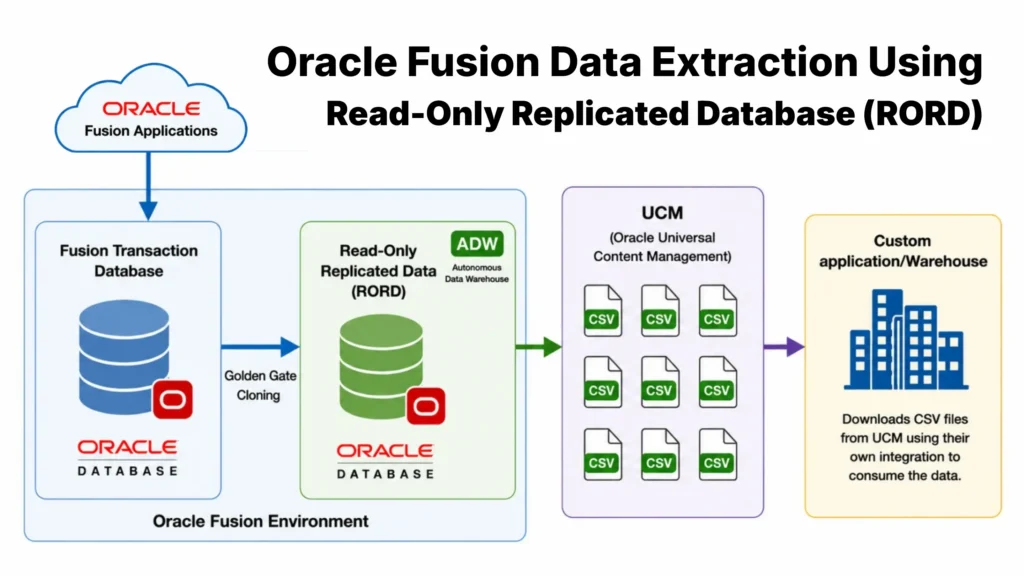
| Data extraction & hybrid integration | Use BICC incremental extracts instead of full ones; automate using trusted ETL tools. |
| Scalability | Break large reports into chunks or use bursting; use caching; archive old data; pre-summarize when possible. |
| Security / Access control | Review and properly set Roles, AORs; test report execution for least privilege; audit logs. |
| Documentation & governance | Maintain field / subject area mapping docs; report catalog; version control; periodic review. Make sure that everyone has access an add a process so that to this so that duplicate reports will not be developed |
| Right use of Tools | Wherever SQL is involved, use a right SQL editor like CloudSQL organization-wide so that BI team is more efficient and power business users with SQL skills can also write SQLs |
Solutions & Tools That Can Help
- Utilize Oracle’s Diagnostic Tools: NQQuery.log, AdminServer-diagnostic.log, and Presentation Services for tracing and troubleshooting issues. These tools also help you debug Oracle BI publisher error efficiently.
- Best practices for dashboards and data extracts (BICC, BI Publisher) are regularly updated on Oracle Support.
- For more flexibility, consider augmenting Fusion with external tools or SaaS offerings that offer SQL-level insights and better cross-app integration
- For more information check our blog on Complete Guide to Oracle BI Publisher Performance Tuning for Fusion Applications
Tips
- Periodically clear BI Server cache and review logs for stale queries.
- Use third-party solutions for advanced analytics or cross-area reports if standard tools fall short.
Also Read: Building a Custom Report Using Reporting Tools in Oracle Fusion
Real-World Anecdotes
These real-life stories show how smart reporting strategies solved major Oracle Fusion reporting challenges with measurable results.
Anecdote 1: Optimizing a Large HR Employee Report for a Telecom Firm in Canada
A large HR employee report at a Canadian telecom firm was failing due to the use of SELECT * with no filters. The query was pulling an extremely large dataset, which multiple business teams were accessing:
- HR team → for headcount analysis
- Benefits team → for benefits reviews
- Expense team → for employee bank account reviews
Because the report attempted to retrieve all columns for all employees, execution time ballooned to 30 minutes.
Upon detailed analysis with the business teams, it became clear that each group only needed a subset of the data. The BI team categorized the report columns into:
- Shared fields (used by all teams)
- HR-specific fields
- Benefits-specific fields
- Expense-specific fields
- Unused fields (not required by any team)
The solution was to split the original report into three optimized reports, each delivering only the relevant fields to the respective team.
✅ Result: By reducing unnecessary data retrieval and eliminating unused columns, runtime dropped from 30 minutes to under 2 minutes for each of the report.
Anecdote 2: Streamlining Reporting Backlogs for a Global Engineering Company
An engineering company with operations in 50+ countries had been on Oracle Fusion for over two years. During this time, the IT team accumulated a backlog of 250+ reporting requirements, in addition to maintaining over 100 custom and standard reports already in use.
The IT team was overwhelmed, and outsourcing costs for new report development were escalating rapidly. The newly appointed IT Reporting Manager initiated a structured approach:
- Created a report column catalog documenting all fields from existing standard and custom reports.
- Mapped backlog requirements against this catalog with the help of a small dedicated team.
- Engaged business units to identify overlaps and highlight opportunities to use or adapt existing reports.
- Customized and repurposed existing reports where possible, enabling cross-team and cross-geography reuse.
✅ Result: Within weeks, the backlog was reduced by 50%, and business teams gained near-immediate access to reports that otherwise would have taken months to develop.
Checklist for Overcoming Reporting Challenges
- Conduct a comprehensive audit: list all reports, their owners, frequency, and real-world use.
- Prioritize slowest reports for tuning and refactoring.
- Apply filter-first practices and reduce wide/complex selects.
- Implement monitoring and performance tracking for report jobs.
- Establish and enforce governance: role design, documentation, and version tracking.
- Enhance tools/platforms: secure SQL access, train users, and adopt collaborative BI editors.
You May Like: Use Oracle Fusion Data Export to Excel Via SQL
Frequently Asked Questions (FAQs)
What are the most common Oracle Fusion reporting challenges?
The most common Oracle Fusion reporting challenges include data access limitations, performance issues, IT dependency, documentation gaps, and scalability constraints.
Why are some reports in OTBI missing fields I see in the Fusion applications?
New or custom fields are not always exposed in OTBI’s subject areas; Fusion enhancements may lag OTBI updates.
How can I reduce Oracle Fusion report slowdowns?
Use granular filters; never use SELECT *; avoid joins on massive tables; and leverage BI logs for root-cause investigation.
Can business users fix report issues without involving IT?
Limited self-service is possible in OTBI; more complex needs typically require BI/IT support or adopting third-party tools for greater flexibility